


【Art & Design English-36】How Japanese Candy Art Is Made (日本糖果藝術)
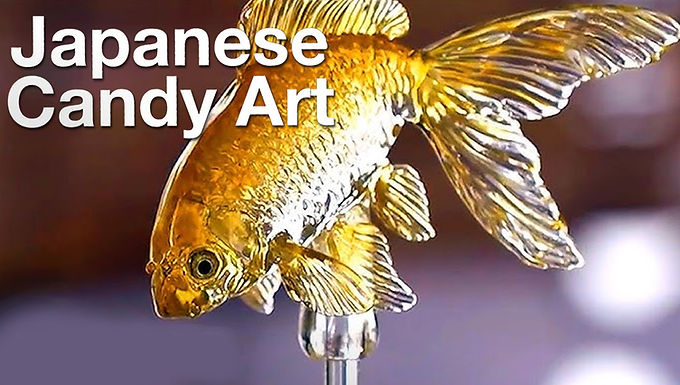
How Japanese Candy Art Is Made Believe it or not, this isn't glassware. It's edible. This is "amezaiku," the traditional Japanese craft. Delicate sculptures, usually of animals, birds, and fish, are molded out of sugar. This is how Japanese candy art is made. Artist Shinri Tezuka is one of the few people left in Japan who practice "amezaiku." He is based at "Asakusa Amezaiku Ameshin" in the Taito City area of Tokyo. One thing that makes candy art attractive is that it is consumable. Of course, one might think it's too beautiful to eat, but this thought is actually the essence of its power. People are attracted to the beauty in ephemeral entities, and I believe this is really a Japanese way of thinking. The base of the artwork is a starchy syrup, which is heated to 90 degrees Celsius, almost 200 degrees Fahrenheit, and requires careful monitoring to ensure proper consistency. The mixture is extracted, then kneaded by hand. A small section is selected and pinched into a spherical shape. Artists do this using their bare hands, which is a skill in itself. The syrup is mounted on a stick, then formed into a shape by constant pulling and clipping. The final shape is painted with food dye using delicate brushes. There are many types of candy. We use candy made from glutinous starch syrup, and also candy that doesn't use starch syrup at all. We actually change the mixture depending on its use - for example, whether it's for eating immediately or for an exhibition. Also, we change the mixture depending on the season. Speed is important, as the candy must be molded before it sets. A goldfish like this takes five minutes to sculpt and up to 10 minutes to paint. At 30 years old, Tezuka is one of the youngest practitioners. Almost nine years have passed since I started candy art. In fact, I used to work as a pyrotechnist, but when I was looking for something interesting that would challenge my crafting skills and I could create in my own hands, I came across candy art. There was almost no place that taught how to do it. I couldn't find anybody to teach me candy art, so I had to start studying by myself. "Amezaiku" is said to have started during the Heian period in the eighth century. Sugar was traditionally spun into shapes for offerings at temples in Kyoto. It became a street performance during the Edo period, which lasted from the 17th century to the 19th century, as its base starch ingredient, "mizumae," or water candy, became more popular. Today, few professional "amezaiku" craftspeople exist in Japan. "Asakusa Amezaiku Ameshin" have two shops in Tokyo. I have eight apprentices and at last, these young people are saying they want to become candy artists. Now we have a place that can accept people who want to become candy artists. References (optional) Links 【Art & Design English- 02】What is Art For? Discussion Questions (Art) How great is your interest in art? What’s the best art gallery you’ve been to? Do you like modern art? What do you think of installation art? Do you ever think a lot of art is not really art? Do you have a favorite artist? What kind of art do you like – paintings, sculpture, ceramics, etc.? What is art? Does art change the way you think or feel? Do you think anyone can be an artist or do you need a special talent? Do you think all children should study art at school? Do you think children should learn the history of art? Do you think a painting can really be worth a million (or more) dollars? Do you think today’s artists are as good as those from hundreds of years ago? What was the last painting/poster/piece of art you bought? Why did you buy it? Describe the pieces of artwork in your house. What kind of art is your country famous for? What kind of life do you think an artist’s is? Do you have any artistic talents? How would the world be different without artists? Discussion Questions (Design) How would you define design? How do you know if something is designed well? Do you think design is important? Why? Have you ever designed anything? What are some well-designed products? What are some poorly designed products? Are there any designers you admire? Have you done any interior design in your home? What are some examples of good design that you appreciate? Why? How does design influence our daily experiences and interactions with products and environments? Can you think of any iconic designs or designers that have made a significant impact on society? What are some key principles or elements of design? How does cultural and historical context influence design aesthetics? Can you describe a design project or process that you have been involved in or observed? How does user experience (UX) design contribute to the functionality and usability of products and services? What role does sustainability play in design? Share examples of environmentally conscious design practices. How can design be used to solve social and humanitarian challenges? What are some current trends in design that you find interesting? How does technology influence the field of design? Discuss the impact of digital tools and software. Can you think of any examples of design that have sparked controversy or provoked discussions? How can design be inclusive and accessible to people with diverse abilities and backgrounds? Can you share any examples of designs that evoke specific emotions or create a particular atmosphere? How does design differ across various disciplines, such as graphic design, industrial design, or interior design? What are some ethical considerations in design? Discuss the responsibility of designers towards users and society. Can you think of any design failures or instances where poor design affected the user experience? What lessons can be learned from them? How can design thinking be applied beyond traditional design fields to problem-solving and innovation? What skills and qualities do you think are essential for a successful career in design? How has technology influenced the field of graphic design in recent years? Can you think of any examples of design that successfully blend form and function? Explain why they are effective. How does cultural diversity influence design aesthetics and the portrayal of different cultures in design? What are some key considerations in designing user interfaces for mobile applications? Can you describe a design project that aims to address sustainability or environmental issues? How does typography contribute to the overall design and message of printed materials? What are some effective ways to gather user feedback during the design process? How can color psychology be utilized in design to evoke specific emotions or convey certain messages? Can you think of any examples where design played a crucial role in shaping a company’s brand identity? What are the main differences between designing for print media and designing for digital media? How can design be used to improve accessibility for individuals with disabilities? Can you describe a design trend that you find intriguing? Why do you think it has gained popularity? How does packaging design influence consumer perception and purchasing decisions? What ethical considerations should designers keep in mind when creating advertisements or marketing materials? How has social media influenced the field of design and the way designers showcase their work? Can you think of any innovative design solutions that have improved people’s lives in developing countries? What are some challenges in designing for virtual reality (VR) or augmented reality (AR) experiences? How does design impact the gaming industry, particularly in terms of user interface and user experience? Can you describe a famous architectural design that has become an iconic landmark? What makes it significant? How do cultural symbols and icons influence design choices, especially in international contexts? Discussion Questions (Art Culture) How often do you go to art museums? Do you consider yourself to be artistic? What do you think about modern art paintings? How many forms of art can you name? What is your favorite form of art? Is graffiti art? Why or why not? What is the most famous statue in your country? Who is your favorite artist? Why do you like them so much? Do you think that art is important to society? Why? Have you ever tried drawing, painting, sculpting, or something else artistic? What is the most famous painting in your country? What is traditional art like in your culture? What country do you think is the most creative? Why is art so expensive? Do you think it should be more, or less, expensive? Do you have any artistic friends? What kinds of art do they create?
How Japanese Candy Art Is Made Believe it or not, this isn't glassware. It's edible. This is "amezaiku," the traditional Japanese craft....